

Why is my dog vomiting and what should I do about it?

Your dog just threw up. Now you're trying to figure out whether this is something simple. Or something you should take seriously. Most of the time, the answer depends on three things:
How many times your dog vomited
What the vomit looked like
How your dog is behaving after
A dog who vomits once and goes back to normal is very different from a dog who keeps vomiting, refuses water, or suddenly becomes quiet and weak.
This is the same framework a vet uses to decide whether you can safely monitor at home, need medication, or should go to a clinic today.
Vomiting and Regurgitation Are Not the Same Thing

Vomiting is not the same as regurgitation. This distinction matters, and most pet parents miss it.
Vomiting usually comes with effort or forceful abdominal contraction. Your dog may look uncomfortable beforehand. Most notable signs include, lip licking, drooling, pacing, swallowing repeatedly, or eating grass. Then comes the abdominal heaving.
Regurgitation is different from vomiting. Food comes back up very easily, usually soon after eating. There is no nausea or retching beforehand. The food often looks undigested because it never reached the stomach properly.
Both can look alarming. But they point to different causes and need different responses. Vomiting usually points to stomach irritation, infection, toxins, heat stress, or illness. Regurgitation can point to problems with swallowing or the food pipe itself.
If you are not sure which one happened, that is completely normal. A video helps a vet identify the difference quickly during an online consultation.
Dog Vomited Once, Usually Not an Emergency
One episode of vomiting in an otherwise healthy adult dog is, most of the time, not an emergency. Dogs vomit more readily than humans. Their reflex is stronger. A single episode can be triggered by:
Eating too fast - extremely common in Indian households where dogs are fed once or twice a day in large portions. They eat too quickly, the stomach stretches suddenly, and the food comes right back up. Usually, the dog acts completely normal afterwards. Some even try eating again immediately.

Eating something unusual which they shouldn't - Street food scraps, garbage, leftover food, something picked up during a walk. In India, this is one of the most common reasons for sudden vomiting in dogs. Sometimes the stomach rejects it once and settles down on its own.
An empty stomach - If your dog vomits yellow foam early in the morning, bile is usually the reason. This often happens when the stomach stays empty for too long overnight and the body ties to clear excess acid. It is common in dogs that eat only one large meal late in the evening.
Motion sickness - Some dogs vomit after long car rides, common in India where car journeys can be long and roads are uneven. This can trigger stress or anxiety and result in vomiting.
Mild heat stress - Indian summers affect appetite and digestion more than most people realise. A dog who got overheated during a walk may vomit once, rest, drink water, and recover normally.
If your dog vomited once but is otherwise acting completely normal, drinking water, walking around, responding to you like usual, you can usually monitor them at home for the next 12 hours. Give the stomach a little time to settle before offering food again. When you do feed them, keep it plain and easy to digest, like boiled chicken and rice.
So When Does Vomiting Become Serious?
What matters is whether it stops after one episode or keeps happening. A dog vomiting once can be something minor. Repeated vomiting usually means the stomach is still irritated, or something else is going on that needs attention.
If your dog vomits two or more times in the same day, a vet should assess the situation. Not because every case is an emergency. Most are not. But repeated vomiting tells you the stomach irritation is continuing, the body is still reacting to something, or dehydration may start becoming a problem. This matters even more in India, where heat and humidity dehydrate dogs quickly. A dog who keeps vomiting and stops drinking water can deteriorate much faster than most pet parents expect.
What the Vomit Looks Like Matters
This is one of the first things a vet asks. Not to be dramatic. Because it genuinely helps narrow down the cause.
Yellow vomit or yellow foam
Usually bile, a fluid produced by liver, often associated with empty stomach. Very common in the morning or after long gaps between meals. If your dog is otherwise normal, this is often manageable with feeding adjustments and monitoring.
Vomiting immediately after eating
Usually points to eating too quickly, mild stomach irritation, or regurgitation.
If it keeps happening repeatedly, a vet should evaluate it.
White foam
Often linked to stomach acid, mild nausea, or an empty stomach. If your dog also has coughing, gagging, or breathing changes alongside it, mention that to a vet.
Grass in the vomit
Dogs often eat grass when their stomach feels unsettled. One episode is usually not alarming. Repeated grass eating followed by repeated vomiting means the stomach irritation is probably not resolving.
Blood in the vomit
Fresh red blood or dark brown vomit that looks like coffee grounds needs veterinary attention immediately. Do not wait this one out at home. Book an online vet consultation on ZOOCO and connect with a vet in 10 minutes.
Common Causes of Dog Vomiting in India
Some triggers show up far more often here than in other countries.
Table scraps and spicy food
Dogs are constantly offered human food by family members, neighbours, security guards, or visitors. Biryani rice, oily curries, leftover dal, fried snacks. Sometimes the stomach tolerates it. Sometimes it absolutely does not.
Tick fever
Tick-borne diseases like ehrlichiosis and babesiosis are extremely common in India, especially during monsoon season. Vomiting combined with lethargy, fever, loss of appetite, or weakness should always put tick fever on the list of possibilities.

Heatstroke
Vomiting is often one of the earliest signs. If your dog was outside, exposed to direct sunlight for long and is now vomiting, panting heavily, acting disoriented, or unusually tired, contact a vet immediately.
Parvovirus
Still very common in unvaccinated puppies across India. Vomiting, diarrhoea, weakness, refusal to eat, and rapid deterioration are major warning signs. Parvovirus can become serious very quickly in puppies. Do not wait a few days to see if it improves on its own.
The Vet Triage Guide: Monitor, Contact a Vet, or Go to a Clinic
This is the part most pet parents are actually trying to figure out.
Watch at home - safe to monitor for up to 12 hours
Your dog vomited once. They're drinking water. They're alert, responsive, behaving like themselves. You can point to a likely cause, like ate too fast, ate something on the walk, it was very hot outside, they were in the car.
What to do: Let the stomach rest for a couple of hours, skip the next meal. Keep fresh water available, but don't push them to drink a lot at once. After the rest, offer a small portion of something plain: boiled chicken and white rice, or plain curd rice without salt or spices. Watch for anything new over the next 12 hours. If nothing changes, you're likely fine.
Contact a vet today - book a ZOOCO online vet consultation India
Your dog has vomited twice or more. Or they vomited once but now seem quieter than usual. Or they're not drinking. Or you can't explain what caused it and it's been going on for more than a few hours. Any of these, contact a vet today.
You don't need to drive anywhere. A ZOOCO vet will talk through exactly what's happening, ask the right follow-up questions, and tell you whether this needs home care or a clinic visit, in under 10 minutes, from wherever you are in India. If a prescription is needed, you'll have it the same session.
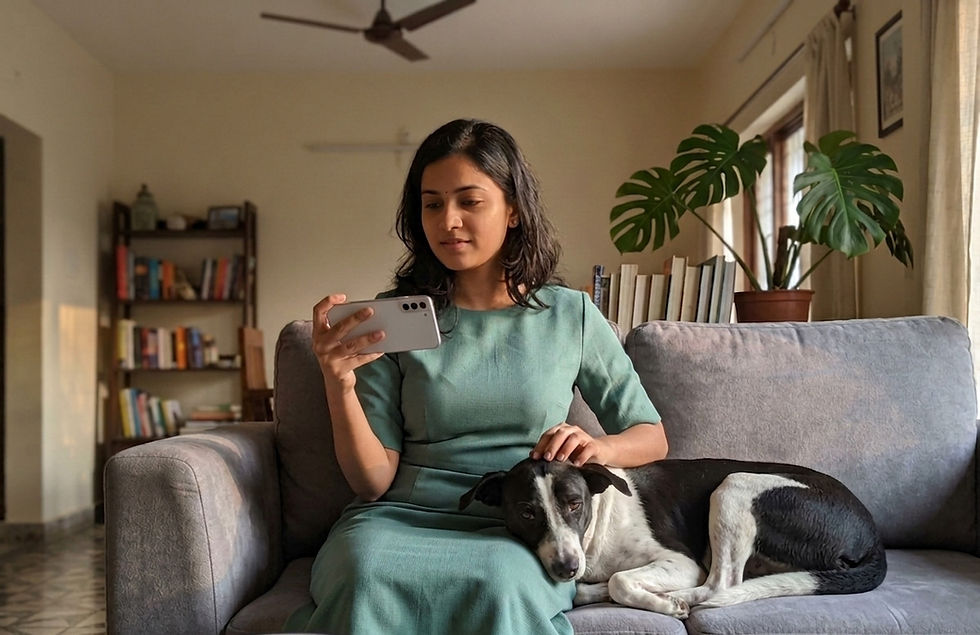
Consultations start at ₹99, with a free follow-up included.
Go to a clinic immediately
Do not wait, if:
There is blood in the vomit - red or dark brown colour
Vomited four or more times and can't keep water down
Your dog is very weak, collapsed, or unresponsive
Your puppy (under 6 months) is vomiting - especially if not fully vaccinated
The belly looks bloated, hard, or distended alongside the vomiting, this can be GDV (gastric dilatation-volvulus), a life-threatening emergency, common in larger breeds like Labradors, German Shepherds, and Golden Retrievers
You suspect heatstroke - vomiting alongside heavy panting and disorientation
Your dog ate something you know is toxic or you suspect poisoning
These situations may need fluids, scans, blood work, or emergency treatment.
What Not to Do When Your Dog Is Vomiting
This part matters as much as what to do.
Do not give human medicines. Domstal, Avomine, Crocin, Gelusil, none of these are safe for dogs without a vet telling you otherwise. Some are outright toxic. The urge to give your dog something is completely understandable. The right "something" is a vet's assessment, not your instinct about what might settle it.
Don't take away water. Some people hear "rest the stomach" and remove the water bowl too. Don't. Water is not the problem, dehydration from repeated vomiting is. Keep water accessible. Small amounts, frequently, is the approach if they're gulping and vomiting it back up.
Don't try to fix it with food. Curd rice with pickle, leftover sabzi, a bit of chicken curry to tempt them, these will irritate an already inflamed stomach lining. If you offer anything, it needs to be completely plain. Boiled chicken, plain white rice, nothing else.
Don't wait four days "to see how it goes." One day of watching is reasonable. If vomiting is still happening on day two, your dog needs a vet. Some causes don't resolve on their own.
Don't assume "they probably just ate something" if anything else seems off. That explanation is often right. It's also sometimes wrong, and a vet can tell the difference in 10 minutes by booking an online vet consultation on ZOOCO
Safe Home Care While You Watch
Your dog vomited once and seems fine. Here's what to do while you monitor.
The stomach rest. Skip the next meal, a 2 to 4-hour gap. Not longer than that. An empty stomach produces more acid, which can trigger more vomiting. After the gap, feed something in small portion.
The bland diet. Boiled chicken, no skin, no bones, no seasoning of any kind. Plain white rice. That's it. Feed smaller portions than usual across two or three meals instead of one big one. This gives the stomach something easy to work with while it settles.

Water, little and often. If your dog drinks a large amount of water immediately after vomiting, they may vomit it straight back up. Offer smaller amounts more frequently. A few laps, a short break, repeat.
Track everything on the ZOOCO pet care app. Time of each episode. What came out. What they ate in the last 24 hours. How they behaved between episodes. When you speak to a ZOOCO vet, or any vet, this record means the conversation starts with answers instead of guesswork.
What needs a vet's sign-off first: Any human medication. Coconut oil, jeera water, or any home remedy you've read about online. And ignoring a second or third episode, hoping it'll just stop.
FAQ: What Dog Parents in India Ask Most
My dog vomited once in the morning and seems completely fine now. Do I still need to see a vet?
Not urgently, no. One episode with no other symptoms, normal energy, drinking water, acting like themselves, is safe to monitor at home for 12 hours. Offer bland food after a short stomach rest. If nothing else happens, you're likely in the clear. If anything changes at all, a second vomit, less water intake, quieter than usual, book a ZOOCO online vet consultation the same day.
My dog vomited yellow foam. What does that mean?
Yellow foam is almost always bile, stomach acid that's built up from an empty stomach. It usually happens first thing in the morning before the first meal, or when a dog goes too long between meals. Not an emergency on its own. Try feeding a small meal in the evening so the stomach isn't empty all night. If it's happening regularly, mention it to a vet, it can sometimes point to a feeding schedule issue or underlying acid sensitivity.
My dog vomited and now won't drink water. What do I do?
Contact a vet today. A dog that is vomiting and refusing water is at real risk of dehydration, and in India's heat that risk moves quickly. This is the moment for a ZOOCO online vet consultation, India - not tomorrow. A vet may recommend a specific re-hydration solution or a clinic visit for fluids, depending on how long it's been going on.
The food my dog eats, can that cause vomiting?
Yes, and more often than people realise. Table scraps with spices, onion, garlic, or high sodium are a very common trigger for vomiting in Indian dogs. Eating too fast is another. If you can connect the vomiting to a specific meal or food event, tell the vet exactly what was eaten and when, it changes the diagnosis.
How do I know if my dog's vomiting is serious?
The clearest signals: blood in the vomit, more than two episodes in a day, not being able to keep water down, lethargy or weakness alongside vomiting, a bloated belly, or a puppy that's vomiting. Any one of these means act today. If you're not sure where you fall, that uncertainty itself is a reason to ask a vet. A ZOOCO online vet consultation takes 10 minutes and removes the guesswork.
The Short Version
Your dog vomited once. They seem fine. Rest the stomach, offer plain food, keep water available, and watch for 12 hours. You're probably okay.
Your dog vomited twice or more. That's the line. Contact a vet today, not because it's definitely serious, but because some of the causes need treatment that waiting won't fix.
Blood in the vomit, bloated belly, puppy vomiting, suspected heatstroke or something toxic. Go to a clinic now, don't wait for anything.
For everything in between, and most vomiting situations sit somewhere in between, a ZOOCO vet will give you a straight answer in under 10 minutes from the comfort of your home.

Medically reviewed by,
Dr. Akhter, MVSc.
Need vet advice? Dr. Akhter reviewed this article and is available for online consultation.
All medical content on the ZOOCO blog is reviewed by licensed veterinarians before publication.

Comments